Why “Dentist Near Me” Is the Search That Matters Most
High-intent searches like “dentist near me” indicate a patient ready to book, making map pack visibility crucial for dental practices.
“Dentist near me” and variations like “emergency dentist [town]” or “dentist accepting new patients [city]” are high-intent searches. The person typing that is not browsing. They’re ready to book.
Google knows this, which is why it serves a map pack — those three listings with stars and a phone number — before any website links. If you’re not in that map pack, you’re losing calls to whoever is, regardless of how nice your website looks.
The good news: ranking in the map pack is driven by local SEO signals, not domain authority or link-building campaigns that cost a fortune. A well-optimised independent practice can absolutely outrank a corporate dental chain.
A well-optimised independent practice can absolutely outrank a corporate dental chain.
Your Google Business Profile Is Doing More Work Than Your Website
For local searches, your Google Business Profile (GBP) is often more critical than your website for initial patient visibility and map pack inclusion.
For local searches, your Google Business Profile (GBP) is arguably more important than your website. It’s the first thing patients see, and it determines whether you appear in the map pack at all.
Most practices set it up once and forget it. That’s a mistake.
Get the basics right first
- Name, address, phone number (NAP): Must match exactly what’s on your website. “St. James Dental” and “St James Dental” are technically different. Pick one format and stick to it everywhere.
- Categories: Your primary category should be “Dentist.” Add secondary categories like “Cosmetic Dentist,” “Orthodontist,” or “Emergency Dental Service” if relevant.
- Opening hours: Keep these current. Wrong hours damage trust and can hurt your ranking.
- Services: List every service — teeth whitening, Invisalign, implants, hygienist appointments. Google reads these.
What most practices ignore
GBP posts. You can publish updates, offers, and FAQs directly to your profile, similar to social media posts. These appear in your listing and signal to Google that the business is active.
Post once a week. A short update like “We have appointments available this month — call to book” takes five minutes and keeps your profile fresh. Practices that post regularly outperform those that don’t, all else being equal.
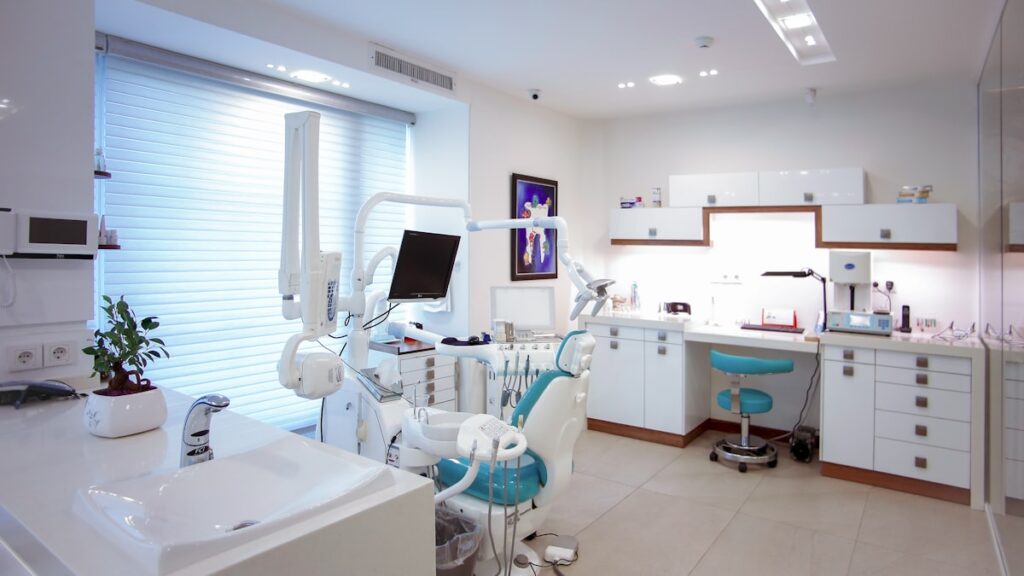
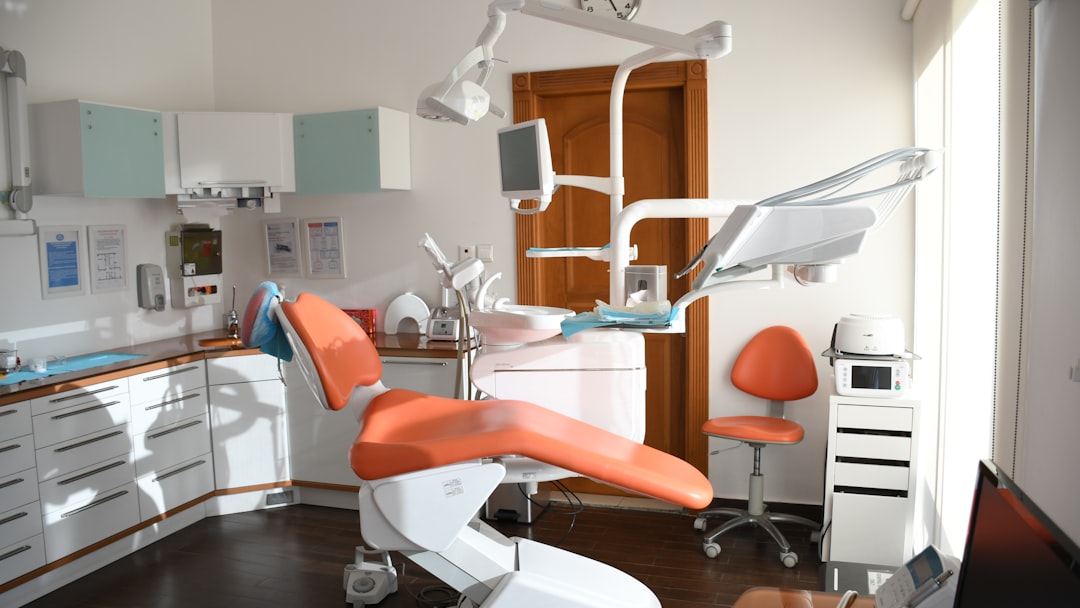
Photos matter more than you’d think. Profiles with more than 100 photos get significantly more views and direction requests than those with a handful of stock images. Add real photos: your reception area, your team, your treatment rooms. Patients want to see where they’re going before they commit.
Reviews: The Ranking Signal You’re Leaving on the Table
Google uses review quantity, recency, and rating as key local search ranking factors, making a proactive review system essential.
Google uses review quantity, recency, and rating as ranking factors for local search. A practice with 200 reviews will almost always outrank one with 20, even if the one with 20 is slightly more geographically relevant.
Most practices rely on the occasional happy patient volunteering a review. That’s too passive.
Build a simple review system
- After each appointment, send a follow-up text or email with a direct link to your Google review page. Not a link to your website — directly to the review box.
- Train your front desk to verbally mention reviews when patients say positive things: “That’s great to hear — would you mind leaving us a Google review? It really helps us.”
- Use a tool like Podium, NiceJob, or even a simple automated email sequence through your practice management software.
Respond to every review — positive or negative. A polite, professional response to a negative review often reassures prospective patients more than a string of five-stars. Never get defensive. Acknowledge, apologise where appropriate, and invite them to call and discuss.
Aim for 10 new reviews per month consistently. That’s more impactful than a one-time burst of 50.
On-Page SEO: What Your Website Actually Needs
Effective on-page SEO for dental practices requires dedicated location and service pages, optimised title tags, meta descriptions, and schema markup.
You don’t need a 50-page website. You need the right pages, properly optimised. Here’s where most dental practice websites fall short.
Location pages
If you serve patients from multiple towns or areas, you need a dedicated page for each location — not just a single contact page. A practice in Indianapolis might create pages targeting “dentist in Carmel,” “dentist in Fishers,” and “dentist in Greenwood” separately.
Each page should include: the location name in the H1 and title tag, a paragraph about the area, a specific address and phone number, an embedded Google Map, and a list of services offered at that location.
Service pages
Every major service should have its own page. Don’t lump “Invisalign, teeth whitening, veneers, and implants” onto a single “cosmetic dentistry” page. Someone searching “Invisalign [city]” needs a page specifically about Invisalign — with the keyword in the title, the H1, the first paragraph, and the meta description.
A dental practice in Phoenix offering implants should have a page titled something like “Dental Implants in Phoenix | [Practice Name]” — not a paragraph buried on a general treatments page.
Title tags and meta descriptions
These are still important. Your homepage title tag should include your primary keyword and location. For example: “Dentist in Austin | New Patient Appointments | [Practice Name]”.
Keep title tags under 60 characters. Meta descriptions under 155 characters. Write them for humans first — they influence click-through rates even when Google rewrites them.
Schema markup
LocalBusiness schema tells Google exactly what your practice is, where it is, and what it offers. It’s code added to your website (or via a plugin like Rank Math if you’re on WordPress). Most dental websites don’t have it. Adding it is a straightforward win that gives you an edge.
Local Citations: Boring but Essential
Consistent and accurate local citations across various directories are crucial for Google to verify your business’s existence and location.
A citation is any mention of your practice name, address, and phone number on another website. Think local business directories, Yelp, Healthgrades, Zocdoc, chamber of commerce listings, and healthcare-specific sites like the American Dental Association directory.
Google uses citations to verify that your business exists where you say it does. Inconsistent citations — different phone numbers, slightly different addresses — create confusion and can suppress your rankings.
Run a citation audit using a tool like BrightLocal or Whitespark. Find the listings where your NAP is wrong or missing. Fix them. Then build new citations on high-authority directories you’re not yet listed on.
You don’t need hundreds of citations. You need the right ones, accurate and consistent. For a dental practice, priority listings include:
- Yelp
- Healthgrades
- Bing Places
- Apple Maps
- Facebook Business
- Zocdoc
- Better Business Bureau
- Local chamber of commerce directories
Content That Attracts Patients (Without Writing a Novel)
Targeted content addressing common patient questions can effectively capture patients mid-decision and drive appointments.
You don’t need a blog with 300 articles. But a handful of well-targeted pieces of content can drive consistent traffic from patients who are actively researching treatment.
Think about the questions your reception team answers every single week. Those questions are search queries. Write pages that answer them.
Examples that work well for dental practices:
- “How much does Invisalign cost in [city]?”
- “Does dental insurance cover teeth whitening?”
- “Is teeth whitening safe?”
- “How long do dental implants last?”
- “What to do if you have a dental emergency on the weekend”
These aren’t just blog posts for the sake of it. They capture patients mid-decision — people who are weighing up whether to book. A well-written page on implant costs that ends with a clear call to action (“Book a free consultation”) converts curious browsers into appointments.
Aim for one solid piece of content per month rather than four rushed posts per week. Quality, relevance, and genuine helpfulness outperform volume every time.
Technical SEO: The Stuff That Quietly Tanks Your Rankings
Addressing page speed, mobile optimization, broken links, and duplicate content is crucial for preventing technical issues from negatively impacting your dental practice’s rankings.
You don’t need to become a developer. But there are a few technical issues that are surprisingly common on dental websites and hurt rankings significantly.
Page speed
Slow websites lose patients before a page even loads. Google’s Core Web Vitals are a ranking factor. Run your site through PageSpeed Insights (it’s free). A score below 50 on mobile is a problem. Common culprits are oversized images, slow hosting, and bloated page builders.
Compress every image before uploading. Use a CDN if your host supports it. Switch to faster hosting if yours is dragging — shared hosting from a budget provider often can’t handle even modest traffic without slowing to a crawl.
Mobile optimisation
Over 70% of “dentist near me” searches happen on mobile. Your website must be fast, readable, and easy to navigate on a phone. Buttons need to be large enough to tap. Your phone number should be a clickable call link. Your booking form shouldn’t require 12 fields.
Broken links and duplicate content
Check for broken internal links using a free tool like Screaming Frog (free for up to 500 URLs). Fix or redirect any 404 errors. Make sure you don’t have multiple versions of the same page accessible via different URLs — this dilutes ranking signals and confuses Google.
What to Do Next
Prioritize these actionable steps to improve your dental practice’s local SEO and map pack visibility.
Don’t try to fix everything at once. Here’s where to start:
- Audit your Google Business Profile today. Check every field is complete, accurate, and matches your website. Add photos if you have fewer than 30.
- Set up a review request process this week. Even a simple follow-up text with a direct Google review link will move the needle within 60 days.
- Check your website has a dedicated page for every core service. If implants, Invisalign, or whitening are buried on a general page, they’re not ranking. Separate them out.
- Run your site through PageSpeed Insights. If you’re scoring below 60 on mobile, flag it to your web developer or agency.
- Search “[your service] in [your town]” in an incognito tab. See exactly where you appear. If you’re not in the map pack, now you know what to work on.
Local SEO for dental practices isn’t complicated. It’s consistent, unglamorous work done properly over time. The practices that show up in the map pack aren’t spending more — they’re just doing the right things that most of their competitors haven’t bothered with.
FAQ
What is the most important search for dental practices?
The most important search is “Dentist near me” and its variations, as these are high-intent searches from people ready to book an appointment.
How often should I post on my Google Business Profile?
You should aim to post once a week on your Google Business Profile to signal to Google that your business is active and keep your profile fresh.
Why are reviews so important for local SEO?
Google uses review quantity, recency, and rating as significant ranking factors for local search, meaning practices with more and newer reviews often outrank competitors.